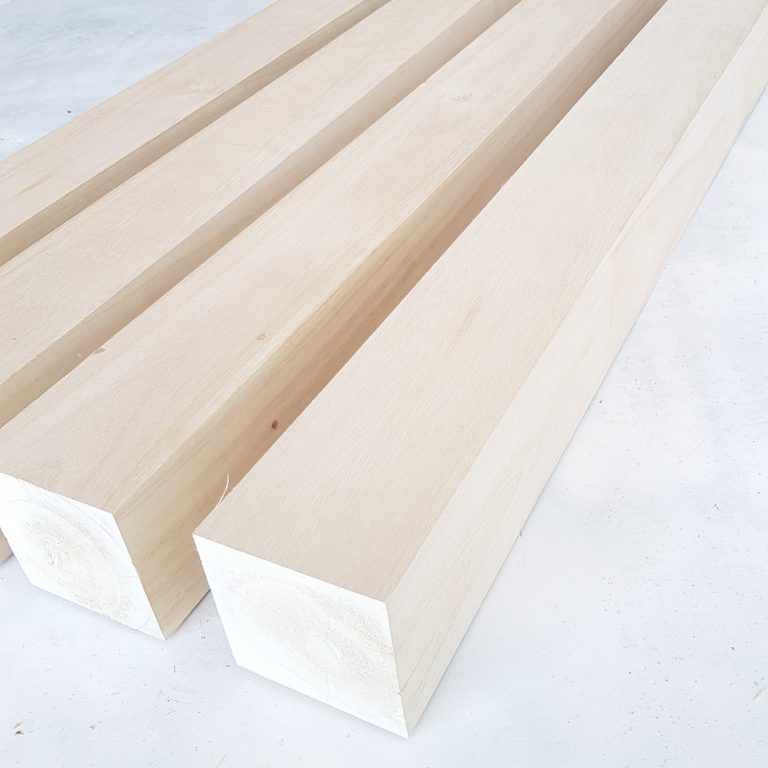

Paulownia Timber
Paulownia timber has an average density of approximately 260 kg/m³, varying slightly by species and growing conditions, yet consistently producing an exceptionally light and strong hardwood.
Its high strength‑to‑weight ratio, combined with excellent elasticity and a favourable modulus of rupture, gives Paulownia distinct performance advantages over many traditional timber species.
With an extremely low shrinkage coefficient, dried Paulownia offers outstanding dimensional stability, maintaining its shape and integrity even under fluctuating environmental conditions.
For external or out‑of‑ground applications, Paulownia should be protected with at least two coats of water‑repellent sealant to ensure long‑term durability.
Naturally resistant to termites, insects, pests, and rot, Paulownia is well‑suited for use in regions where these challenges are common, making it a reliable and sustainable choice for a wide range of structural and manufacturing applications.
Plant a tree
Planting Trees is one of the most effective ways to help our planet and reverse climate change before it is too late. Not only do Trees produce oxygen, but they capture carbon dioxide and other harmful greenhouse gases. Trees convert CO2 from the atmosphere into organic matter through photosynthesis, which eventually ends up in the ground as dead plant matter.
The Paulownia tree during it growth it has up to 10 times the capacity of any other tree to capture carbon dioxide (CO2), it grows and matures extremely fast and can be felled multiple times before having to be replanted. The Paulownia tree is therefore the tree of choice for reforestation in order to help the environment and reverse climate change.
By planting a tree you are reducing your carbon footprint and as such you are making a positive contribution in assisting to reduce climate change.